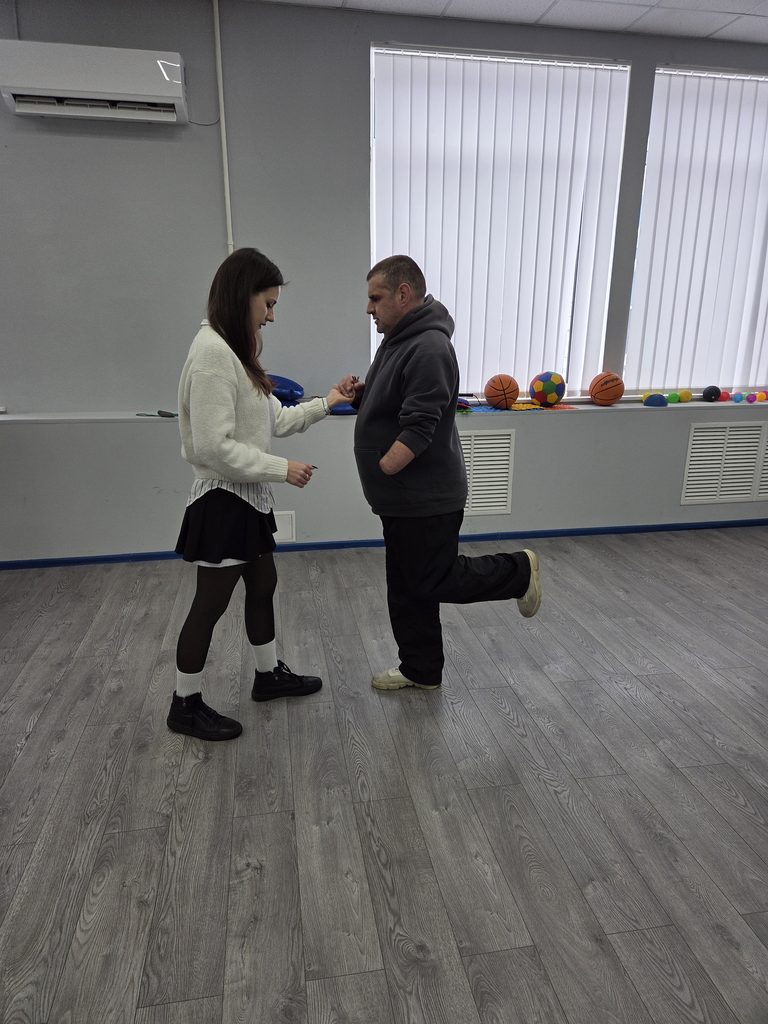
My dear friends, I am doing well. I continue to live in Kyiv and work at the “Trinity HUB” rehabilitation center. During this time, there have been several drone strikes by Russian barbarians—with explosions occurring just 2–3 kilometers from my home—as well as instances where the Armed Forces of Ukraine shot down drones directly overhead, causing me to feel the shockwaves. I haven’t been able to write articles because I’ve sustained several minor injuries this year and have been constantly working with blind military personnel at the center. However, I have developed some personal insights regarding the rehabilitation process and its effectiveness for blind soldiers, and I would like to share them with you.
It is a very simple question: is a sports trainer needed in a rehabilitation center when there are already specialists with degrees in rehabilitation? Why does this question arise? Because universities specializing in physical education and sports are now training adaptive sports coaches capable of working with people who have special needs—and these students study the fundamentals of rehabilitation as part of their training.
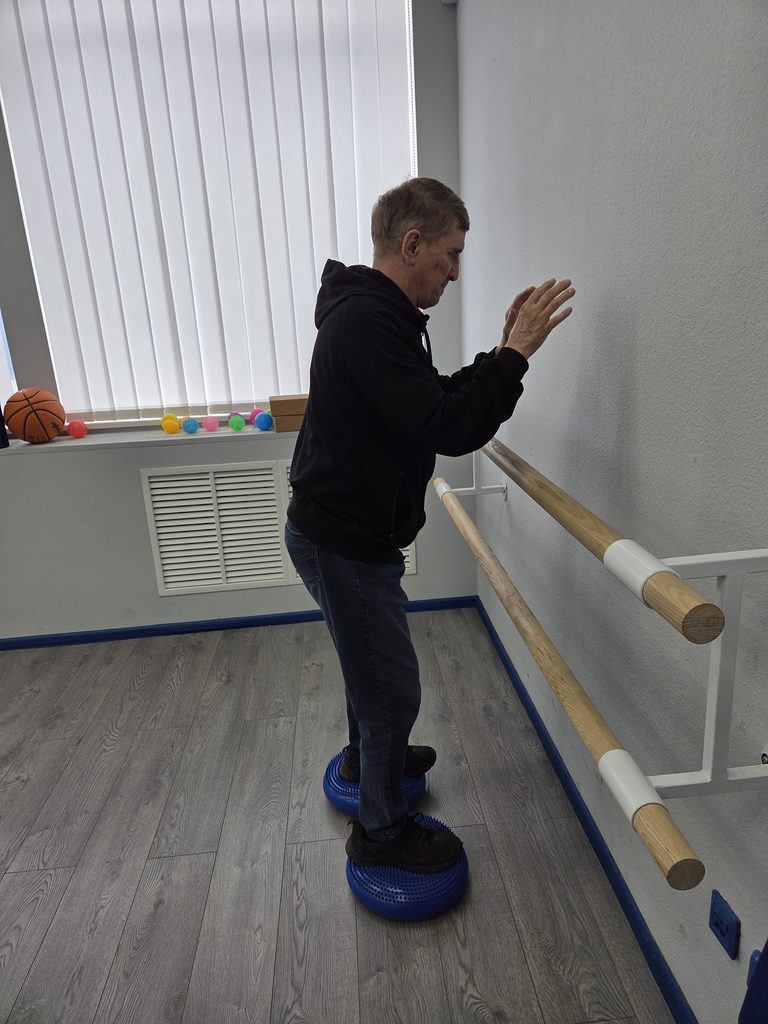
If we view the rehabilitation process from the perspective of rehabilitation specialists, it is about restoring the function of an injured body part to enable the individual to survive and function in their environment. Rehabilitation specialists possess a medical background and are guided by specific protocols for rehabilitating the particular injured body part when working with patients. If a patient has an injured arm, will the rehabilitation specialist work with them on strengthening musculoskeletal muscles during the recovery of the arm’s function, or after that function has been restored?
I would like to reiterate that I am approaching this issue from the perspective of rehabilitating a blind person. It seems to me that having an adaptive sports coach at the rehabilitation center would be highly beneficial, given that the vast majority of wounded military personnel suffer from hearing impairments alongside vision loss due to blast injuries.
I believe a sports coach is always focused on helping their trainee continuously improve their skills. This is crucial for a blind person because, while we cannot physically restore a patient’s vision, we can maximize compensation for its absence by enhancing other senses and teaching additional skills.
Experience working with blind individuals and wounded service members has shown that it is vital for them to acquire not only survival skills but also the skills necessary for social integration.
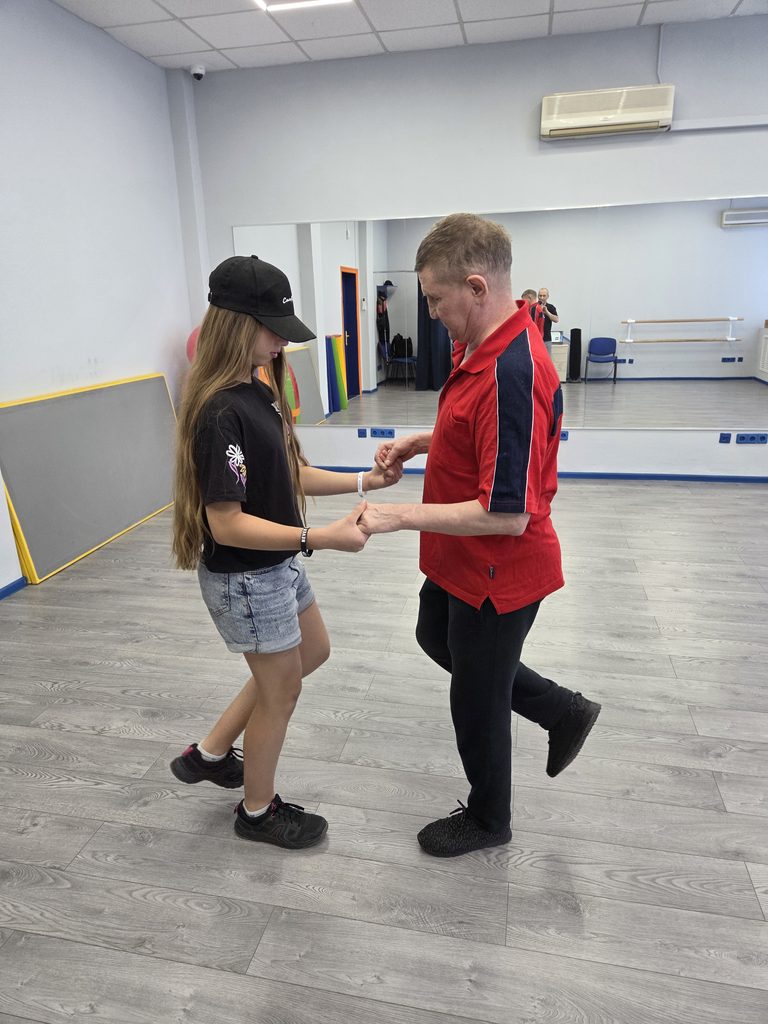
From a purely survival-oriented perspective, dance-based rehabilitation—or the ability to dance—is unnecessary. However, from a social standpoint, dance rehabilitation holds great significance, especially for the blind. Naturally, everything depends on the patient’s individual characteristics, and the emotional impact of dance rehabilitation will vary from person to person. My professional experience has shown that dance-based rehabilitation has a positive impact on all visually impaired military personnel. It is truly gratifying to observe the changes in a visually impaired soldier’s condition throughout the rehabilitation process.
My work in dance rehabilitation with visually impaired military personnel has yielded the following key positive results:
It has a significant positive effect on the soldiers’ post-traumatic stress levels.
Physical activity among visually impaired individuals increases sharply, as does proprioceptive awareness within the musculoskeletal system.
Dance rehabilitation reduces the risk of injury for visually impaired individuals when moving about outside the home and boosts their emotional well-being.
Dance rehabilitation fosters self-confidence among visually impaired soldiers and significantly reduces feelings of inferiority.
Dance rehabilitation improves the functioning of the vestibular system, thereby greatly enhancing spatial awareness.
My next article will focus on dance rehabilitation practices for a soldier who has residual vision but uses a leg prosthesis.
Glory to Ukraine!