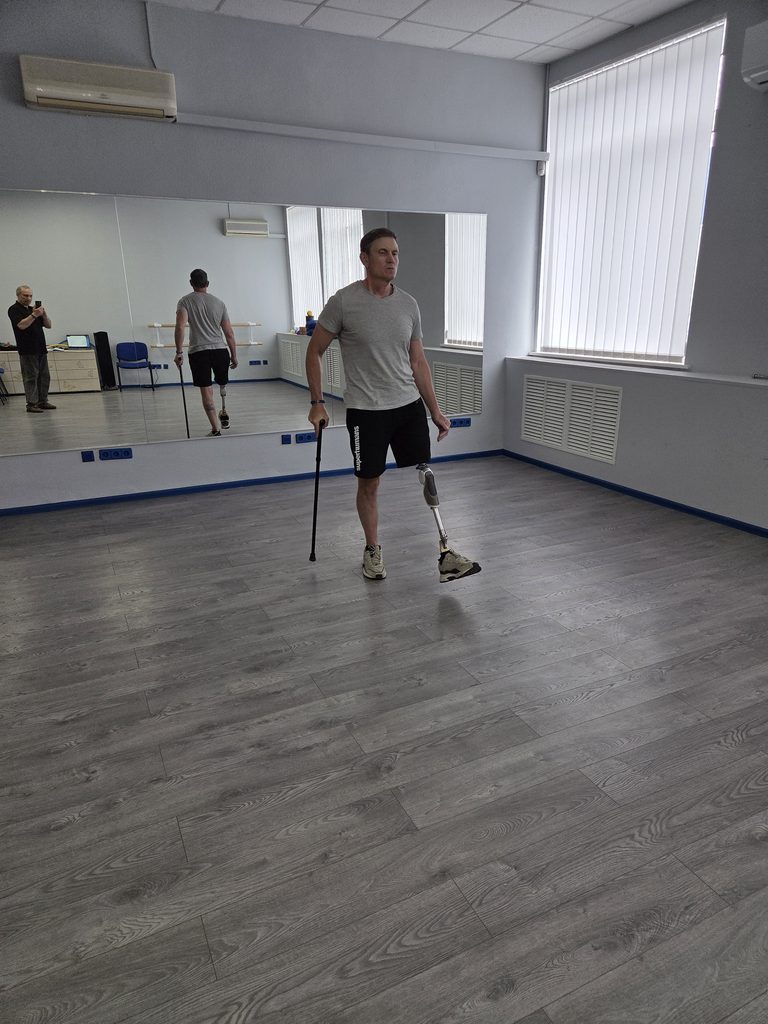
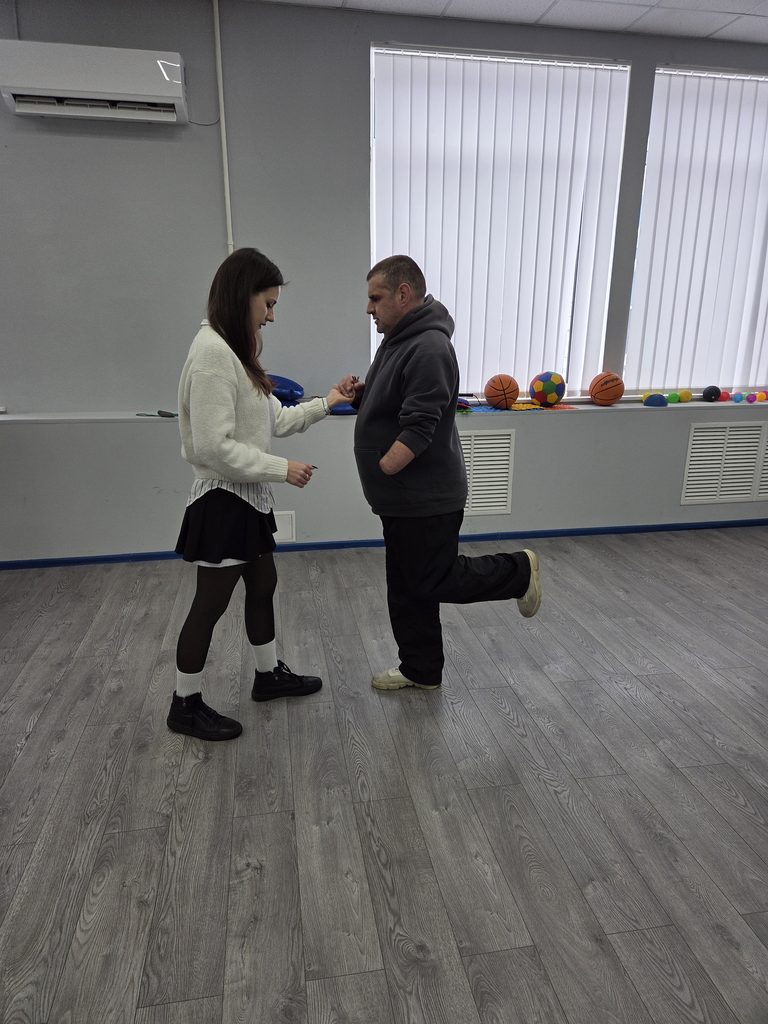
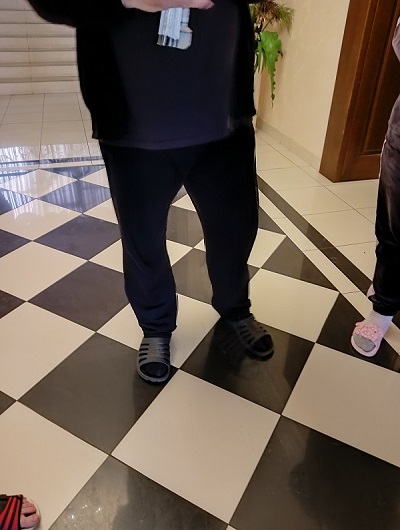
I recently had a wonderful opportunity to apply my expertise in dance rehabilitation to a serviceman who had residual vision and a prosthesis on his left leg.
In May 2026, a serviceman named Ihor—who had a leg prosthesis—arrived at our rehabilitation center. Nearly a year and a half had passed since he sustained his injuries; he had almost no vision in his right eye, and about 20 percent vision in his left. Furthermore, as a result of blast injuries, his hearing was impaired—by 60 percent in his right ear and 40 percent in his left. Ihor’s cognitive faculties remained fully intact, and he was highly motivated to improve his safety and mobility when moving through space.
When Ihor came to my sessions and I observed how he moved, my first question to myself was: “Is there anything I can do to help him?” My answer was: “Yes.” I always ask myself this question whenever a new patient arrives.
My dear friends, I am doing well. I continue to live in Kyiv and work at the “Trinity HUB” rehabilitation center. During this time, there have been several drone strikes by Russian barbarians—with explosions occurring just 2–3 kilometers from my home—as well as instances where the Armed Forces of Ukraine shot down drones directly overhead, causing me to feel the shockwaves. I haven’t been able to write articles because I’ve sustained several minor injuries this year and have been constantly working with blind military personnel at the center. However, I have developed some personal insights regarding the rehabilitation process and its effectiveness for blind soldiers, and I would like to share them with you.
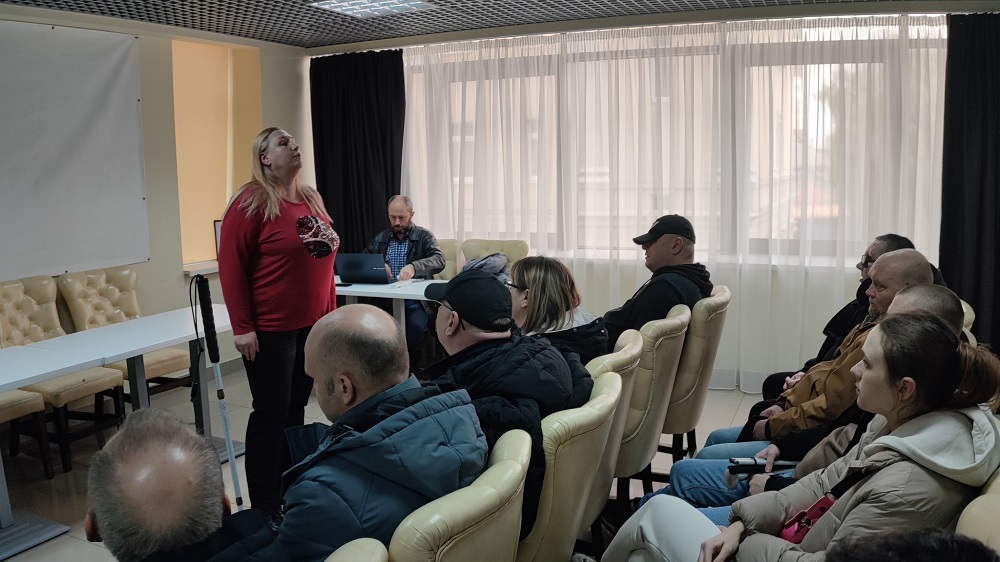
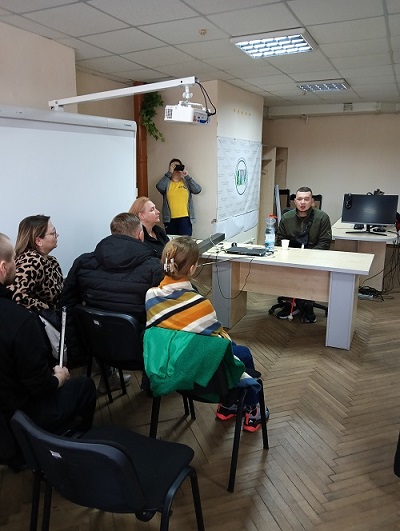
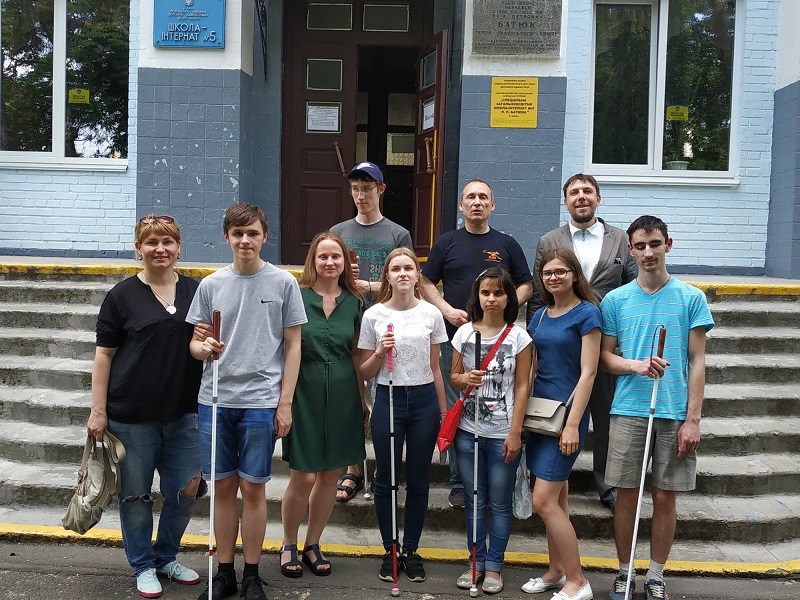
Recently, I took part in the work of another rehabilitation camp “Life after the war” for veterans who have lost their sight and their family members. The holding of these camps was made possible with the financial support of the Oleksandr Tereshchenko International Charitable Foundation and the “We will see victory” charity organization headed by Vadym Eshchenko. I am very grateful to Olesya Perepechenko, the main organizer of this camp, the head of the “Modern View” public organization, for the opportunity not only to systematically work with blind soldiers, but also to work as an accompanying for a blind person.
This camp had one feature that significantly distinguished it from the previous ones – in parallel, boys who came for the first time, as well as those who decided to deepen their knowledge and skills, took part in it. Two weeks of continuous classes allowed me to draw several conclusions about the psychological features of dance therapy with blind soldiers.
Firstly, the absolute majority of military personnel and members of their families almost never met with blind people on any issues, did not imagine how blind people live and did not even realize that the world of blind people exists. And of course, after receiving a combat injury and losing sight, these soldiers felt very strong psychological stress, unlike people who gradually lost their sight due to various diseases. Relatives of blind soldiers also did not understand how to help them, how to properly accompany them. The medical staff in the military hospitals where the blind soldiers were admitted at the beginning of the injury are also not trained in how to properly accompany the blind wounded, because they were all the time learning how to restore the sight of the wounded soldiers.
And from the first feature arises the second psychological feature, which is that during the stay in a military hospital and at home among relatives before being admitted to specialists, each blind soldier develops an individual idea of how he should be accompanied outside the home. Especially during their stay in a military hospital during medical rehabilitation, relatives try to fulfill almost all the wishes of the wounded soldier. And over time, some blind soldiers have the idea that all those accompanying them must adapt to them.
And if another person tries to accompany a blind serviceman, there is a high probability that the blind serviceman may experience discomfort while moving, because in his opinion the accompanying person does not know how to accompany him. My practice of accompanying blind wounded soldiers for two weeks showed that blind soldiers are not ready to follow the accompanying person correctly.
Personally, I believe that all blind people should perceive an attendant as a guide on the road with additional information. At the same time, they should understand that each guide cannot be perfect, the attendant is more like the guides that are laid down in different cities of Ukraine. The accompanying person does not guarantee absolutely complete safety during movement. Therefore, a blind person, regardless of the fact that he is accompanied, must constantly work with a white cane for the purpose of his safety of movement.
In the rehabilitation camps organized by Olesia Perepechenko, there are always trainings with the attendants on how to properly accompany a blind person. But at the end of the training, we realized that blind soldiers also need to be trained on how they should be accompanied and how they should follow the person accompanying them. This primarily concerns the speed of movement and the sense of direction of the accompanying person. After getting injured, a blind soldier, depending on the severity of the injury, stays in a lying position for two or three months. And then, when he gets up, his vestibular apparatus begins to perceive the surrounding space differently, and for his own safety, the blind soldier begins to walk very slowly, spreading his feet and losing the sense of speed during this time.
During my classes with blind soldiers, I paid attention to this and tried to always give them the opportunity to feel the speed of an ordinary person while moving at the end of the class. In addition, I noticed that some blind soldiers, when asked to put their feet together, begin to feel uncomfortable and lose their balance. And this habit of placing the feet shoulder-width apart has a very negative impact on the ability of a blind person to keep the direction of movement.
I advise specialists in mobility and spatial orientation to pay attention to this when conducting classes. I suggest comparing the feet of blind military men who have had a short period of time since losing their sight with those of blind people who have been blind since childhood.
The third psychological feature, in my opinion, is that not all blind military men who suddenly lost their sight as a result of being wounded are mentally not ready to perceive themselves as listeners, not as spectators watching the world around them. And I believe that the degree of psychological readiness of a blind military man to perceive himself as a listener depends on the effectiveness of the work of specialists working with blind people. I also believe that psychologists have a lot of room to develop tests that will determine the degree of readiness of a blind military man to perceive himself as a listener of the world around him. On the one hand, this will make it possible to determine how effective the work of specialists can be, and on the other hand, it will provide additional information to psychologists in which direction they should work with a blind military who does not yet perceive himself as a listener.
The fourth psychological feature, in my opinion, is that their relatives accompanying them should be present at classes with blind soldiers. Practice has shown that this is very important, especially when a blind soldier dances with his wife. It was a completely different feeling that caused a lot of emotions. I understood that since the time of the injury, almost all of them had not danced. And what was very interesting to observe, everyone liked the dances and they did not pay attention to other people during the dance, although the classes were held in the hotel lobby. Readers can see how our camp was conducted from the plot of public television, on which I provide the relevant link.